
Introduction to warehousing
Health and safety, manual handling and working in a warehouse.
Warehousing courses

Introduction to warehousing: essential warehouse operative course
The introduction to warehousing course is designed for UK employers seeking to equip their employees with the foundational skills needed to operate safely and efficiently in a warehouse environment.
Whether your business is onboarding new staff or upskilling existing team members, this comprehensive training ensures that your workforce understands the key principles of working within a warehouse setting, with an emphasis on health and safety, manual handling, and operational best practices.
Who is this course for?
This course is ideal for:
New or inexperienced warehouse operatives.
New or inexperienced warehouse operatives.
Key modules
Health & safety in the warehouse
Understanding safety legislation and regulations.
Risk assessments: identifying and managing hazards.
Safe use of Personal Protective Equipment (PPE).
Fire safety and emergency protocols.
Manual handling techniques
Principles of safe lifting and moving.
Reducing the risk of injury during manual tasks.
Use of mechanical aids (e.g., forklifts, pallet trucks).
Proper posture and ergonomics in a warehouse environment.
Warehouse operations
Overview of warehouse processes and workflows.
Picking, packing, and stock control basics.
Equipment handling: safe operation of warehouse tools and machines.
Teamwork and communication in the warehouse setting.
Learning outcomes
Have a solid understanding of the health and safety regulations relevant to warehousing.
Be able to perform manual handling tasks safely and reduce the risk of injury.
Understand key warehouse processes and how to operate in a team setting effectively.
Course content
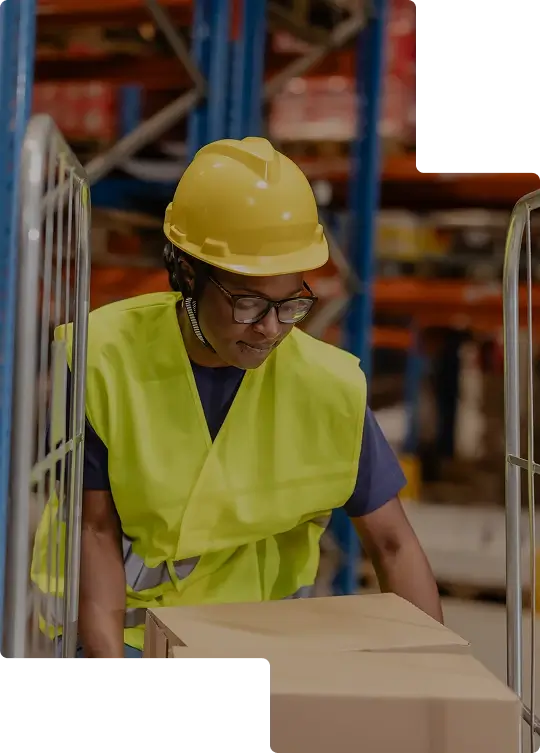
In the first unit, you will be introduced to warehouses and will look at some common activities within these environments. You will look at the common risks and injuries associated with working in a warehouse environment. You will look at some of the laws relating to warehouse health and safety with a focus on employer and employee responsibilities. You will consider some of the enforcement action that can be taken if employers do not follow the law. Finally, you will look at some case studies of warehouse accidents and health and safety management.
In this unit, you will consider the meaning of risk assessment and will look at what the law requires. You will consider what constitutes a suitable and sufficient risk assessment. You will consider why risk assessments are important. You will learn about who is responsible for risk assessments and who is competent to complete them, as well as exploring the five steps of risk assessment.
In this unit, you will consider the meaning of risk assessment and will look at what the law requires. You will consider what constitutes a suitable and sufficient risk assessment. You will consider why risk assessments are important. You will learn about who is responsible for risk assessments and who is competent to complete them, as well as exploring the five steps of risk assessment.
In this unit, you will explore the process of reporting and recording accidents in the workplace. You will look at what usually happens if there is an accident in the workplace and if someone is injured. You will consider the need for first aid, the legal duties and the provisions that should be considered. You will look at why accidents and near misses should be reported, recorded and investigated. You will explore the requirements for reporting certain injuries externally. Finally, you will look at reporting and recording accidents and near misses internally.
In this unit, you will be introduced to the definitions of slips, trips and falls. You will look at some statistics that will highlight the seriousness of these hazards and will consider some of the injuries that can result from accidents. You will explore the causes of slips, trips and falls and will consider ways of preventing the risks. You will explore ways of preventing falls, and will look at the hierarchy of control for working at height. Finally, you will look at some examples of work at height equipment and will consider how to reduce the risk of falls when using this equipment.
In this unit, you will be introduced to some of the electrical equipment that can be found in a warehouse-based environment. You will learn about what electricity is and will look at some electrical hazards that can be found in a warehouse. You will consider some of the risks and injuries that can result from these hazards. You will look at an overview of the laws relating to electrical equipment. You will explore the need for maintenance, and will consider how the risks associated with electricity can be reduced and controlled. You will look at protective devices and other safety measures.
Frequently Asked Questions
Warehouse safety training is crucial to prevent accidents, reduce downtime, and ensure compliance with health and safety regulations. Our Introduction to Warehousing course equips your employees with the knowledge to operate safely and efficiently, minimising workplace risks and enhancing overall productivity.
The best course will depend heavily on your organisations requirements.
If you need a course that is going to prepare new and existing employees for work within a warehouse and enable them to hit the ground running, then the Introduction to Warehousing course is a great option.
It’s one of the most comprehensive options for training warehouse operatives in the UK. It covers essential skills like health and safety, manual handling, and warehouse operations, making it ideal for businesses looking to ensure their staff are fully trained and compliant with regulations.
Yes, we offer flexible training delivery options, including onsite training at your location. This allows your staff to be trained in a familiar environment, with minimal disruption to your daily operations. We also offer training at one of our 100+ locations across the UK, options if preferred.
The total cost of warehouse operative training depends on a number of factors such as the number of employees, location, and any business specific training requirements. To get an accurate price, get in touch here.
Upon successful completion of the Introduction to Warehousing course, each employee will receive a certificate of completion. This certificate demonstrates their competency in key areas such as manual handling, equipment use, and warehouse safety, and helps ensure your business meets regulatory requirements.
How can we help?
Contact us today and a member of our Sales Team will be in touch to understand your needs or give us a call on 0330 818 8888.